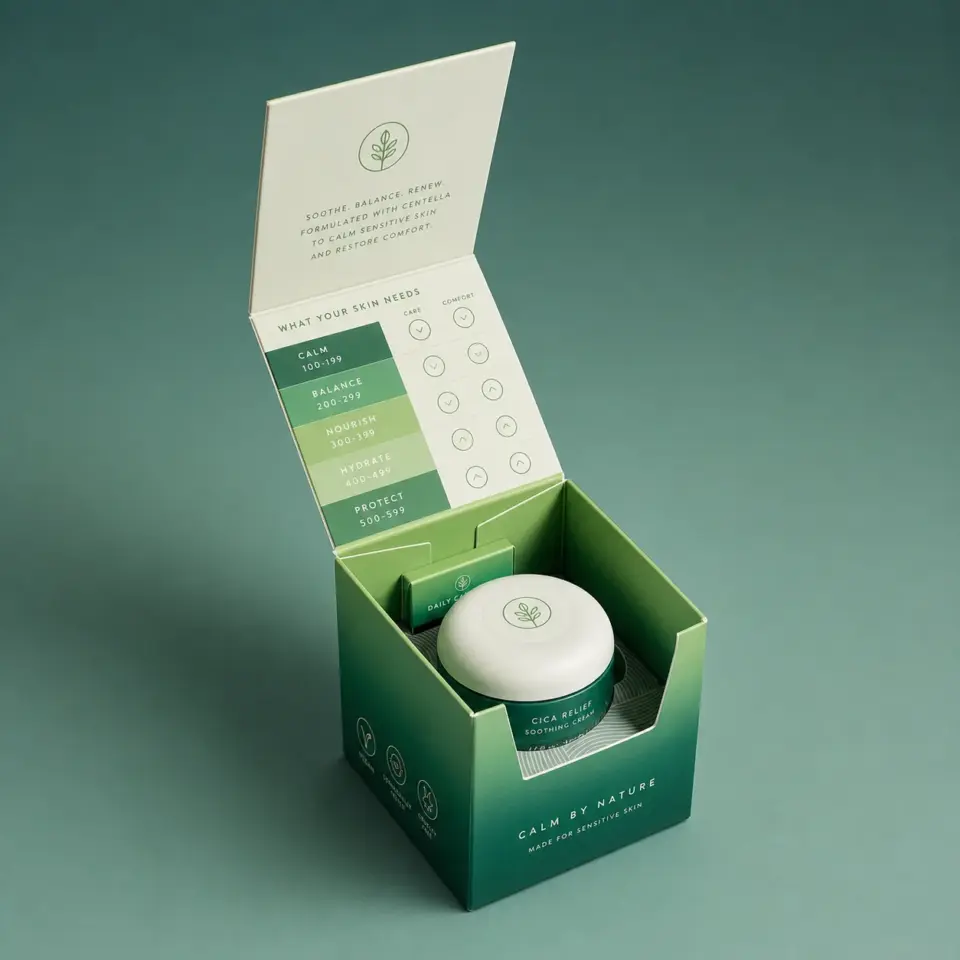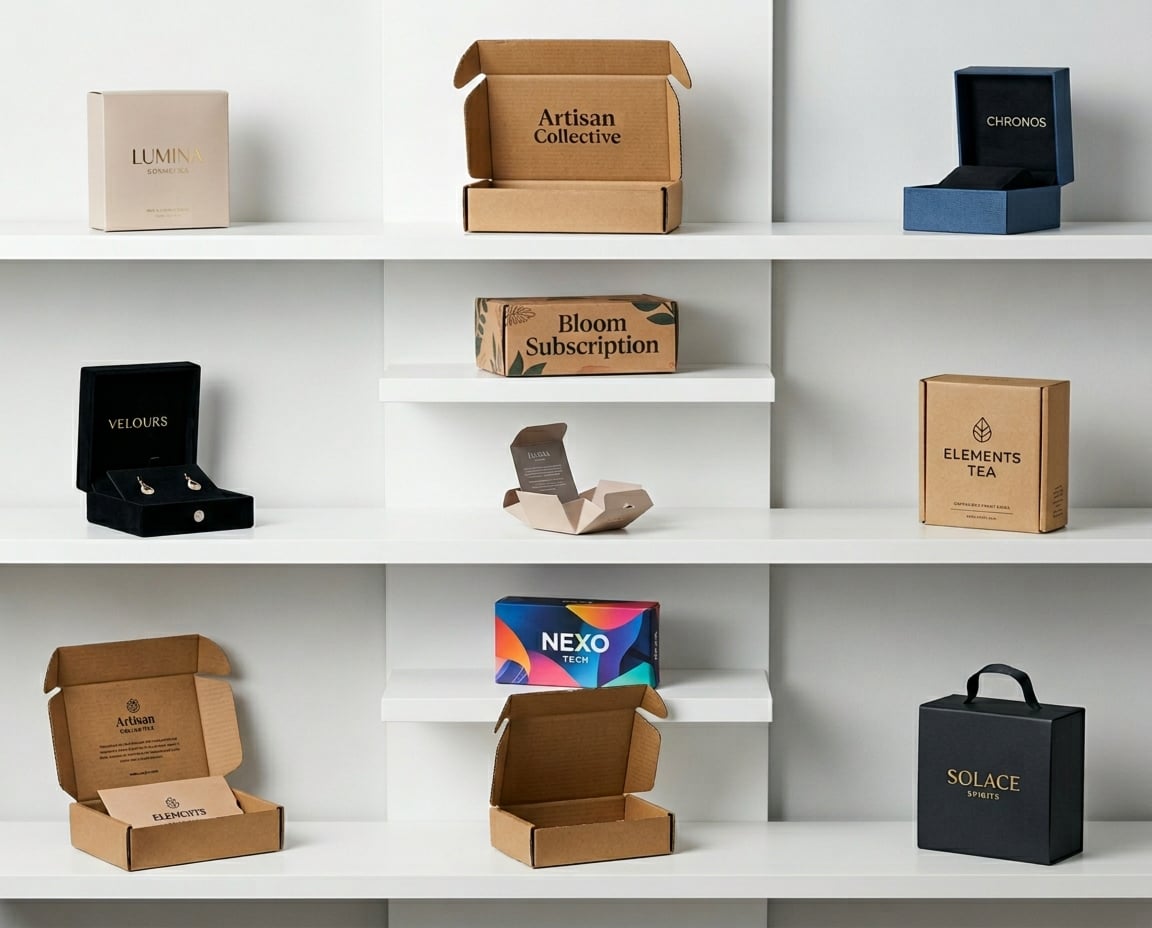
Packaging types are the structural categories of containers used to protect, ship, store, and present a product. Packaging types are grouped along three axes: box format (mailers, shippers, folding cartons, rigid boxes, sleeves, trays), material (corrugated fiberboard, paperboard, kraft, plastic, metal, glass), and use case (e-commerce shipping, retail display, primary product packaging, bulk transport).
Choosing the right packaging type directly shapes four things every brand cares about: unit cost, product protection, print quality, and the unboxing experience. Packaging types are not the same as packaging design — types define the structure of the box, while design covers the artwork printed on it.
This guide walks through every common box format, the materials each one is made from, and the situations each type is best suited for, so you can match the right packaging to your product with confidence.
What Are Packaging Types and Why Do They Matter?
Packaging types are the different box formats, structures, and materials brands use to hold, protect, and present their products. The type of packaging you choose shapes everything from how your product looks on a shelf to how safely it arrives at a customer’s door. A luxury candle in a rigid box feels like a gift. The same candle in a plain brown mailer feels like an afterthought. That difference is not random — it is a direct result of packaging type selection.
Every product needs packaging, but not every product needs the same kind. A $200 perfume bottle demands a magnetic-closure rigid box with a soft-touch finish. A $12 protein bar needs a simple folding carton that runs fast on a packing line. A 50-pound auto part needs a double-wall corrugated box that can survive five days on a freight truck. The packaging type you pick must match your product’s weight, fragility, price point, and sales channel.
How Does Packaging Type Affect Cost, Protection, and Brand Perception?
Packaging type directly controls three things: how much you spend per unit, how well your product survives shipping, and how customers feel when they first see or touch your product. A rigid box costs $3 to $8 per unit at low volumes, while a folding carton costs $0.15 to $0.80. That price gap means a brand selling 100,000 units per month would spend $300,000 on rigid boxes versus $15,000 on folding cartons. Protection also varies. Corrugated boxes with B-flute walls absorb drops and stacks far better than thin folding cartons, making them the right choice for heavy or fragile goods shipped long distances.
Brand perception is harder to measure but just as real. Studies show that 72% of consumers say packaging design influences their buying decisions. A well-made rigid box with foil stamping and embossing signals premium quality. A custom-printed mailer box with branded tissue paper creates an unboxing moment that customers share on social media. The packaging type sets the tone before the customer even sees the product inside.
What Are the Three Main Categories of Packaging?
All packaging falls into three main categories: primary, secondary, and tertiary. Each category serves a different purpose in the journey from factory to customer. Understanding these three layers helps brands decide which packaging types they actually need and where to invest their budget.
What Is Primary Packaging?
Primary packaging is the first layer that directly touches or contains the product. It is the bottle that holds the shampoo, the blister pack around a pill, or the foil wrapper around a chocolate bar. Primary packaging must protect the product from contamination, moisture, and damage. It also carries required information like ingredients, dosage, and expiration dates. For example, a glass perfume bottle with a spray nozzle is primary packaging — it holds the fragrance and lets the customer use it.
What Is Secondary Packaging?
Secondary packaging is the outer box or container that groups and protects one or more primary packages. It is the folding carton around a perfume bottle, the rigid box around a watch, or the printed sleeve around a set of soap bars. Secondary packaging serves two jobs: it adds a layer of physical protection, and it carries brand identity through graphics, colors, and structural design. When people talk about “packaging design,” they usually mean secondary packaging.
What Is Tertiary Packaging?
Tertiary packaging is the outermost layer used for bulk shipping and warehouse storage. It includes corrugated shipping cases, stretch-wrapped pallets, and shrink-bundled trays. Tertiary packaging is rarely seen by end consumers. Its job is purely functional — to protect large quantities of products during transport. A pallet of 500 folding cartons shrink-wrapped together and stacked on a truck is tertiary packaging in action.
How Do Primary, Secondary, and Tertiary Packaging Work Together?
These three layers work as a system. Consider a jar of face cream. The glass jar with a screw-top lid is the primary packaging. The printed folding carton around the jar is the secondary packaging. The corrugated case that holds 24 folding cartons for shipping is the tertiary packaging. Each layer adds protection and serves a different audience — the consumer, the retailer, and the warehouse worker. Brands that skip a layer often face problems. Shipping a glass jar without a secondary carton inside a corrugated case leads to breakage. Sending a premium product without branded secondary packaging leads to a weak first impression.
What Is a Rigid Box and When Should You Use One?
A rigid box is a sturdy, non-collapsible box made from thick chipboard (typically 1.5 mm to 2.5 mm) wrapped in printed paper, fabric, or specialty material. Rigid boxes are the gold standard for luxury and premium packaging. They do not bend, flex, or crush under normal handling. When you open an iPhone, a high-end watch, or a bottle of premium whiskey, you are almost certainly opening a rigid box.
Rigid boxes cost more than other packaging types. Unit prices typically range from $2.50 to $10 depending on size, material, and finish. Minimum order quantities usually start at 500 to 1,000 units. Despite the higher cost, rigid boxes deliver the strongest shelf presence and the most memorable unboxing experience of any packaging format.
What Are Rigid Boxes Made Of?
Rigid boxes are made from dense chipboard, also called greyboard or binder board. This chipboard is 1.5 mm to 2.5 mm thick — about four to six times thicker than folding carton stock. The chipboard forms the structural skeleton of the box. It is then wrapped in a printed sheet of art paper (usually 157 gsm coated paper), specialty paper like linen-textured stock, or even leather, velvet, or wood veneer for ultra-premium applications. The wrapping paper carries all the branding — logos, colors, patterns, and finishes like foil stamping, embossing, and spot UV.
What Products Are Best Suited for Rigid Box Packaging?
Rigid boxes work best for high-value, low-volume products where the packaging itself is part of the brand experience. Three common categories include luxury cosmetics like premium skincare sets and high-end makeup palettes, consumer electronics like smartphones and headphones, and fine jewelry like rings, necklaces, and watches. These products share a few traits: they carry retail prices above $50, they sell in moderate quantities (hundreds to low thousands per month), and their customers expect a premium presentation.
What Is a Magnetic Closure Rigid Box?
A magnetic closure rigid box uses hidden magnets embedded in the flap and body to create a satisfying snap-shut closure. The magnets are small neodymium discs, usually 10 mm to 15 mm in diameter, glued into recesses in the chipboard. When the lid closes, the magnets align and pull the flap firmly into place. This creates a tactile “click” that feels intentional and premium. Magnetic closure boxes are popular for cosmetics gift sets, luxury candles, and high-end tech accessories. They cost roughly $0.50 to $1.50 more per unit than standard rigid boxes because of the added magnet hardware and assembly labor.
What Is a Lift-Off Lid Rigid Box?
A lift-off lid rigid box has a separate top that slides off the base. Think of a classic shoe box or a gift box from a department store. The lid fits snugly over the base with a 1 mm to 2 mm overlap. This design is simple, reliable, and easy to manufacture. Lift-off lid boxes work well for products that are displayed inside the box, like jewelry, chocolate assortments, and stationery sets. They are the most affordable rigid box style because they require less complex assembly than magnetic or collapsible versions.
What Is a Collapsible Rigid Box?
A collapsible rigid box is a rigid box engineered with scored joints so it can fold flat for storage and shipping. Standard rigid boxes are shipped fully assembled, which takes up a lot of warehouse space. A collapsible version folds down to roughly 15% of its assembled volume. The customer or retailer pops it into shape in seconds. Collapsible rigid boxes save significantly on freight and storage costs. They are common in subscription boxes, wine packaging, and fashion retail where brands ship empty boxes to stores or fulfillment centers in bulk.
What Is a Shaped Rigid Box?
A shaped rigid box breaks away from the standard rectangle. It can be round, hexagonal, heart-shaped, triangular, or virtually any custom form. Shaped rigid boxes are built by die-cutting chipboard into custom panels and wrapping them by hand. They are expensive — often $5 to $15 per unit — and require skilled handwork. Brands use shaped boxes for limited-edition releases, holiday gift sets, and ultra-premium product launches where the packaging itself becomes a collector’s item. Examples include hexagonal perfume boxes, round hat boxes for fashion accessories, and pyramid-shaped chocolate gift boxes.
What Is a Folding Carton and When Should You Use One?
A folding carton is a lightweight box made from a single sheet of paperboard that is die-cut, scored, folded, and glued into a box shape. Folding cartons are the most widely used packaging type in the world. They hold cereal boxes, medicine boxes, cosmetic boxes, food containers, and thousands of other everyday products. Their key advantage is efficiency: folding cartons ship flat, run fast on automated packing lines, and cost as little as $0.10 to $0.80 per unit at scale.
What Materials Are Folding Cartons Made From?
Folding cartons are made from paperboard stock ranging from 270 gsm to 600 gsm in thickness. The three most common substrates are SBS (Solid Bleached Sulfate), which is a bright white, smooth board ideal for high-quality printing; CCNB (Clay Coated News Back), which has a white printable front and a grey recycled back, used for cost-sensitive products; and kraft paperboard, which has a natural brown look popular with eco-friendly brands. SBS board delivers the sharpest print quality and is the standard choice for cosmetics, pharmaceuticals, and food packaging. CCNB costs roughly 20% less than SBS but produces slightly duller print results.
What Are the Most Common Folding Carton Structures?
Folding cartons come in several standard structures. Straight tuck end (STE) cartons have tuck flaps on the top and bottom that fold in the same direction — they are the most common style for retail products like toothpaste and tea boxes. Reverse tuck end (RTE) cartons have tuck flaps that fold in opposite directions, which improves display angles for shelf-facing products. Auto-bottom cartons have a pre-glued base that snaps into a locked position when opened, providing a sturdy bottom for heavier items like bottles and jars. Sleeve-and-tray cartons use an inner tray that slides into an outer sleeve, creating a drawer-like opening experience common in premium electronics and chocolate packaging.
What Products Are Best Packaged in Folding Cartons?
Folding cartons work best for lightweight to medium-weight products sold at retail in moderate to high volumes. Three ideal product categories include cosmetics and skincare (lipsticks, serums, and face creams), food and beverage (tea boxes, snack bars, and cereal), and pharmaceuticals (medicine boxes, supplement bottles, and health products). These products typically weigh under 500 grams, sell thousands of units per month, and need strong shelf visibility through printed graphics.
What Are the Limitations of Folding Cartons?
Folding cartons have real limits. They cannot support products heavier than about 1 kg without risking structural failure. They offer minimal crush protection compared to corrugated boxes — a folding carton will collapse if stacked under heavy weight. They are also unsuitable as standalone shipping containers because they lack the cushioning and rigidity needed to survive carrier handling. Brands that need folding cartons for retail display must still use a corrugated outer shipper for transit protection.
What Is a Corrugated Box and When Should You Use One?
A corrugated box is a strong, lightweight box made from fluted paper sandwiched between flat linerboard layers. This fluted structure gives corrugated boxes their signature strength-to-weight ratio. They are the backbone of global shipping — over 95% of products in North America are shipped in corrugated containers. Corrugated boxes protect products from drops, stacking pressure, vibration, and moisture better than any other paper-based packaging type.
How Is a Corrugated Box Constructed?
A corrugated box is built from three or more layers. The simplest version, called single-wall corrugated, has three layers: an outer liner, a fluted (wavy) medium in the middle, and an inner liner. The wavy flutes act like tiny arches, absorbing shock and distributing force across the box wall. Double-wall corrugated adds a second fluted layer for even more strength. Triple-wall corrugated, the most heavy-duty option, uses three fluted layers and can support loads up to 120 kg per box. The liner papers are usually kraft or test liner, and the fluting medium is semi-chemical or recycled fiber.
What Are the Different Flute Types in Corrugated Packaging?
Flute type determines the thickness, cushioning, and stacking strength of a corrugated box. A-flute is the thickest at about 5 mm, offering the best cushioning for fragile products like glassware and ceramics. B-flute is about 3 mm thick and provides a good balance of crush resistance and printability — it is the most popular choice for die-cut retail displays and e-commerce boxes. C-flute is roughly 4 mm thick and is the standard for general shipping cases. E-flute is about 1.5 mm thick, nearly as thin as paperboard, and is used for lightweight corrugated cartons that need high-quality printing, such as cosmetic outer boxes and pizza boxes. F-flute is the thinnest at about 0.8 mm and is used for small, rigid containers like jewelry mailers and clamshell food packaging.
What Products Are Best Suited for Corrugated Boxes?
Corrugated boxes are ideal for heavy, fragile, or bulk-shipped products. Three major use cases include consumer electronics (televisions, monitors, and appliances), e-commerce shipments (multi-item orders and subscription boxes), and industrial goods (machine parts, automotive components, and building materials). Any product that needs to survive warehouse stacking, freight handling, or last-mile delivery benefits from corrugated packaging.
How Do Corrugated Boxes Compare to Folding Cartons?
Corrugated boxes and folding cartons serve different purposes. Corrugated boxes are thicker (3 mm to 15 mm wall thickness), stronger, and designed for shipping protection. Folding cartons are thinner (0.3 mm to 0.8 mm), lighter, and designed for retail display and branding. Corrugated boxes cost $0.50 to $3.00 per unit depending on size and wall type. Folding cartons cost $0.10 to $0.80. In practice, many products use both: a folding carton for retail shelf appeal inside a corrugated shipping case for transit protection. A fragile glass bottle of premium olive oil, for example, sits in a printed folding carton, which goes inside a corrugated shipper with divider inserts.
What Is a Mailer Box and When Should You Use One?
A mailer box is a one-piece corrugated box with interlocking flaps that folds into a self-contained shipping container. It needs no tape, no additional outer box, and no extra void fill in most cases. Mailer boxes are the signature packaging format of the direct-to-consumer (DTC) e-commerce era. When a customer orders from brands like Glossier, Allbirds, or Dollar Shave Club, the product arrives in a custom-printed mailer box. The box serves as both the shipping container and the brand experience.
How Are Mailer Boxes Designed for E-commerce?
Mailer boxes are designed to solve the core challenge of e-commerce packaging: combining protection, branding, and cost in a single box. They are made from E-flute or B-flute corrugated board, which provides enough strength for carrier handling without adding excessive weight or cost. The one-piece tuck-front design eliminates the need for a separate lid and base. Most mailer boxes feature a front tuck flap that opens to reveal the product, an interior print area for branded messaging or instructions, and exterior print on all six faces for maximum shelf and doorstep impact.
Mailer boxes ship flat, which saves warehouse space. A stack of 100 flat-packed mailer boxes takes up roughly the same space as 10 assembled boxes. Assembly is quick — a warehouse worker can fold and pack a mailer box in under 10 seconds. Standard sizes range from 150 mm × 100 mm × 50 mm for small items like cosmetics to 400 mm × 300 mm × 150 mm for larger products like shoes and apparel.
Why Are Mailer Boxes the Standard for Direct-to-Consumer Brands?
Mailer boxes became the DTC standard for three reasons. First, they combine the shipping container and the branded experience into one box, cutting costs by eliminating the need for a separate inner box plus outer shipper. Second, they create an unboxing moment. The opening experience — lifting the tuck flap, seeing the interior print, discovering tissue paper or inserts — drives organic social media content. Research shows that unboxing videos generate billions of views annually on YouTube and Instagram. Third, mailer boxes have low minimum order quantities. Many manufacturers offer custom-printed mailer boxes starting at just 100 to 500 units, making them accessible to startups and small brands.
What Are the Design Levers Unique to Mailer Boxes?
Mailer boxes offer several unique design opportunities. Interior printing lets brands add a second layer of messaging — instructions, thank-you notes, QR codes, or artwork — that only appears when the customer opens the box. Custom inserts made from corrugated or molded pulp hold products in place and add a structured, intentional feel. Tear strips integrated into the box create easy-open functionality without scissors or knives. Perforated return flaps make it simple for customers to reseal and return a product using the same box, which improves the returns experience.
What Are the Limitations of Mailer Box Packaging?
Mailer boxes have drawbacks. They are not suitable for retail shelf display because their boxy shape and corrugated texture lack the polished finish of rigid boxes or folding cartons. They cannot handle heavy products well — most mailer boxes support a maximum internal weight of about 3 to 5 kg before the tuck flaps weaken. Custom-printed mailer boxes also cost more than plain brown shipping boxes. A branded mailer typically runs $1.00 to $3.50 per unit, while an unprinted kraft shipper costs $0.30 to $0.80. Brands selling very high volumes may find that the per-unit premium adds up significantly.
What Other Packaging Formats Should Brands Consider?
Beyond the four main box types — rigid, folding carton, corrugated, and mailer — several other packaging formats serve specific product needs. Each format has its own strengths, cost profile, and ideal use case.
What Is Tube Packaging and When Is It Used?
Tube packaging is a cylindrical container made from rolled paperboard, kraft paper, or cardboard. Tubes range from small lipstick-sized containers (20 mm diameter) to large poster tubes (75 mm diameter or more). They are popular for products with a natural cylindrical shape, such as cosmetics like lip balm and mascara, rolled documents like posters and certificates, and food items like tea leaves and spice blends. Paper tubes cost roughly $0.30 to $2.00 per unit. They offer a distinctive shelf presence because the round shape stands out among rectangular boxes.
What Is Sleeve Packaging and How Does It Reduce Cost?
Sleeve packaging is a wrap-around paperboard band that slides over a product or an inner tray. It is an open-ended structure — no top, no bottom — that relies on friction to stay in place. Sleeves reduce cost because they use 40% to 60% less material than a fully enclosed box. They also reduce printing cost because the print area is smaller. Sleeves work well for products that have their own primary packaging, such as soap bars wrapped in paper, candle jars with lids, and boxed chocolate trays. A printed sleeve over a clear product lets the customer see the product while still delivering brand messaging.
What Are Flexible Pouches and Which Products Use Them?
Flexible pouches are bags made from layered plastic films, foil, or paper laminates. They are lightweight, sealable, and take up minimal space when empty. Common types include stand-up pouches with resealable zippers, flat pouches for single-use sachets, and spouted pouches for liquids. Flexible pouches dominate categories like snack foods (chips, dried fruit, and granola), pet food and treats, and coffee and tea. They cost $0.05 to $0.50 per unit at volume, making them the most affordable packaging type per unit. Their main drawback is limited brand perception — pouches feel less premium than boxes.
What Is Clamshell and Blister Packaging?
Clamshell and blister packaging use thermoformed clear plastic shells to hold and display products. A clamshell is a single piece of plastic that folds over and snaps shut. A blister pack seals a plastic dome onto a printed cardboard backer. Both formats let customers see the product through the clear plastic. They are common in electronics accessories (chargers, cables, and earbuds), toys and action figures, and hardware items (screws, bolts, and drill bits). These formats offer strong theft deterrence because they are hard to open discreetly. However, they face growing criticism for being difficult to recycle and frustrating to open.
What Is Molded Pulp Packaging?
Molded pulp packaging is made by pressing wet recycled paper fibers into custom-shaped molds, then drying them into rigid forms. The result is a sturdy, cushioning, biodegradable tray or insert. Molded pulp is the material used in egg cartons, and it has expanded into premium applications. Apple uses molded pulp inserts for iPhones and AirPods. Wine brands use molded pulp shippers. Cosmetics brands use molded pulp trays inside rigid boxes. Molded pulp costs more than foam ($0.50 to $2.00 per insert versus $0.10 to $0.30 for foam), but its eco credentials make it attractive to sustainability-focused brands.
When Are Wooden and Metal Tin Packaging Used?
Wooden boxes and metal tins are specialty packaging formats used for ultra-premium or artisanal products. Wooden boxes are common for fine wines and spirits, premium cigars, and handcrafted jewelry. They cost $5 to $25 per unit and are often kept by customers as keepsake storage. Metal tins are popular for specialty teas, mints and candies, and cosmetics like lip balm and solid perfume. Tins cost $1 to $5 per unit and offer excellent protection against moisture and light. Both formats have high minimum order quantities (typically 1,000 to 5,000 units) and longer lead times than paper-based alternatives.
How to Choose the Right Packaging Type for Your Product
Choosing the right packaging type is one of the most important decisions a brand makes. The wrong choice wastes money, damages products, or weakens brand perception. The right choice aligns packaging with your product, your customer, and your budget. Five key factors determine the best packaging type for any product.
How Do Product Properties Determine Packaging Type?
Start with what you are packaging. Product weight, fragility, shape, and sensitivity to moisture or light all narrow your options. A heavy ceramic vase (1.5 kg) needs corrugated packaging with cushioning inserts — a folding carton would collapse. A lightweight silk scarf (50 grams) works in a simple folding carton or even a poly mailer. A fragile glass perfume bottle needs a rigid box with a molded insert or a corrugated box with foam padding. Products sensitive to moisture, like chocolate or dried herbs, need sealed flexible pouches or foil-lined cartons. Always let the product’s physical properties drive the structural decision first, then layer branding on top.
How Does Sales Channel Determine Packaging Type?
Where you sell determines how your packaging must perform. Retail shelf products need strong visual branding, a compact footprint, and the ability to stand upright — folding cartons and rigid boxes excel here. E-commerce products need shipping durability, lightweight construction, and an unboxing experience — mailer boxes and corrugated shippers are the right choice. Wholesale and B2B products prioritize palletization, stacking strength, and labeling — plain corrugated cases with minimal printing work best. Brands that sell across multiple channels often need different packaging types for the same product. A skincare brand might use a rigid box for department store retail, a mailer box for online DTC orders, and a corrugated case for wholesale distribution.
How Does Brand Positioning Determine Packaging Type?
Your price point and brand identity set expectations for packaging quality. Premium and luxury brands (products above $50 retail) typically require rigid boxes with specialty finishes like foil stamping, embossing, and soft-touch lamination. Mid-range brands (products between $15 and $50) often use high-quality folding cartons or custom-printed mailer boxes. Value and mass-market brands (products under $15) prioritize cost efficiency with standard folding cartons or flexible pouches. Packaging that looks cheap undermines a premium price. Packaging that looks extravagant on a budget product signals waste. The key is alignment between price, brand story, and packaging quality.
How Do MOQ and Budget Determine Packaging Type?
Minimum order quantities and unit costs vary dramatically across packaging types. Rigid boxes typically start at 500 to 1,000 units with costs of $2.50 to $10 per unit. Folding cartons start at 1,000 to 3,000 units at $0.10 to $0.80 per unit. Mailer boxes start at 100 to 500 units at $1.00 to $3.50 per unit. Corrugated shippers start at 500 to 1,000 units at $0.50 to $3.00 per unit. A startup launching with 500 units cannot afford rigid box MOQs at $5 per unit — that is $2,500 in packaging alone. The same startup could start with custom mailer boxes at $2 per unit for $1,000 total, testing the market before investing in premium packaging.
How Do Sustainability Priorities Affect Packaging Type Selection?
Brands with strong sustainability commitments should prioritize packaging types that are recyclable, made from renewable materials, and right-sized to reduce waste. Paper-based formats like folding cartons, corrugated boxes, and molded pulp score highest on recyclability — over 80% of corrugated boxes in the U.S. are recovered for recycling. Rigid boxes with mixed materials (chipboard plus plastic lamination plus magnets) are harder to recycle. Flexible pouches with multi-layer plastic and foil laminates are the least recyclable. Brands can improve sustainability by choosing single-material packaging, eliminating plastic windows and films, using FSC-certified paper, and printing with soy-based or water-based inks.
Packaging Types Comparison Table: Cost, Protection, Print, MOQ
Side-by-Side Comparison of Rigid, Folding, Corrugated, Mailer, and Tube
Understanding the trade-offs between packaging types is easier with a direct comparison. Here is how the five major packaging types stack up across the criteria that matter most to brands.
Rigid Box — Unit cost: $2.50–$10.00. Protection level: high. Print quality: excellent (offset on wrap paper). Typical MOQ: 500–1,000 units. Best for: luxury goods, gifts, premium electronics. Sustainability: moderate (mixed materials reduce recyclability).
Folding Carton — Unit cost: $0.10–$0.80. Protection level: low to moderate. Print quality: excellent (offset or digital on paperboard). Typical MOQ: 1,000–3,000 units. Best for: retail cosmetics, food, pharmaceuticals. Sustainability: high (single-material, widely recycled).
Corrugated Box — Unit cost: $0.50–$3.00. Protection level: very high. Print quality: moderate (flexo standard, digital improving). Typical MOQ: 500–1,000 units. Best for: shipping, heavy products, bulk packaging. Sustainability: very high (most recycled packaging material).
Mailer Box — Unit cost: $1.00–$3.50. Protection level: moderate to high. Print quality: good (flexo or digital on corrugated). Typical MOQ: 100–500 units. Best for: e-commerce DTC, subscription boxes. Sustainability: high (corrugated, single material).
Tube — Unit cost: $0.30–$2.00. Protection level: moderate. Print quality: good (offset on wrap paper). Typical MOQ: 1,000–3,000 units. Best for: cosmetics, rolled items, food. Sustainability: high (paper-based, recyclable).
The trade-offs are clear. Rigid boxes deliver the best experience but cost the most. Folding cartons balance cost and branding for retail. Corrugated boxes lead in protection and sustainability. Mailer boxes offer the lowest barrier to entry for DTC brands. Tubes provide a unique shape at moderate cost.
Which Packaging Types Are Best for Each Industry?
Different industries have different packaging requirements based on product characteristics, regulatory demands, and customer expectations. Here is how packaging type selection plays out across six major industries.
Best Packaging Types for Cosmetics
Cosmetics packaging must balance visual appeal, product protection, and retail compliance. The best options are folding cartons for everyday items like lipsticks, foundations, and skincare serums — they offer high-quality printing at scale. Rigid boxes work for premium gift sets, limited-edition launches, and holiday collections. Mailer boxes are ideal for DTC cosmetics brands shipping directly to consumers. Most cosmetics brands use a combination: folding cartons for individual products, rigid boxes for gifting, and mailer boxes for e-commerce orders.
Best Packaging Types for Perfume
Perfume packaging demands luxury presentation and breakage protection for glass bottles. Rigid boxes with custom foam or molded pulp inserts are the industry standard. A typical perfume box is a two-piece rigid box with a lift-off lid, interior flocking or satin, and exterior finishes like foil stamping and embossing. Folding cartons are used for lower-priced fragrances and body mists. For e-commerce shipping, perfume brands add a corrugated outer shipper with cushioning to prevent breakage during transit.
Best Packaging Types for Jewelry
Jewelry packaging must feel precious and protect delicate items from scratching and tarnishing. Small rigid boxes with hinged lids or magnetic closures are the gold standard. Interior materials include velvet, satin, or foam pads that cradle rings, necklaces, and earrings. For e-commerce, jewelry brands often use a rigid box inside a small corrugated mailer box. Budget-friendly alternatives include folding carton jewelry boxes with foam inserts for fashion jewelry priced under $30.
Best Packaging Types for Food and Beverage
Food packaging must meet safety regulations, maintain freshness, and communicate nutrition information clearly. Folding cartons are the workhorse for dry goods like cereal, pasta, and tea. Flexible pouches dominate snacks, coffee, and dried fruit. Corrugated boxes handle glass bottles of beverages, canned goods, and bulk food shipments. Specialty food brands often use rigid boxes for gift sets like chocolate assortments and gourmet spice collections. All food packaging must comply with FDA regulations for food-contact materials, which restricts the types of inks, coatings, and adhesives that can be used.
Best Packaging Types for Apparel
Apparel packaging ranges from simple to elaborate. Fast fashion and basics ship in poly mailers or plain corrugated boxes to minimize cost. Premium apparel brands use custom tissue paper, branded stickers, and mailer boxes to create an unboxing experience. Luxury fashion houses use rigid boxes with magnetic closures, ribbon ties, and custom dust bags. Retail-bound apparel typically uses minimal secondary packaging — a hang tag and a branded shopping bag serve as the packaging at point of sale.
Best Packaging Types for E-commerce
E-commerce packaging must survive carrier handling, minimize shipping cost through dimensional weight optimization, and deliver a positive customer experience at the doorstep. Mailer boxes are the standard for small to medium DTC products. Corrugated shipping boxes are needed for larger or heavier items. Poly mailers work for soft goods like clothing and accessories. The best e-commerce packaging strategies use right-sized boxes to reduce dimensional weight charges, branded interiors to enhance unboxing, and easy-open and easy-return features to improve customer convenience.
What Are the Most Common Mistakes When Choosing a Packaging Type?
Choosing the wrong packaging type is expensive. It wastes money, damages products, and disappoints customers. Here are five mistakes brands make most often.
Why Using a Rigid Box for High-Volume SKUs Hurts Margins
Rigid boxes cost $2.50 to $10 per unit. At 10,000 units per month, that is $25,000 to $100,000 in packaging cost alone. Many brands default to rigid boxes because they look impressive, without calculating the impact on unit economics. A brand selling a $40 candle in a $6 rigid box has 15% of its revenue consumed by packaging. Switching to a $1.50 custom folding carton with premium finishes saves $45,000 per month at 10,000 units — while still looking great on the shelf.
Why Folding Cartons Fail for Heavy Products
Folding cartons are designed for lightweight products. A 300 gsm paperboard wall cannot support a 1 kg glass bottle without buckling or tearing. Brands that try to save money by using folding cartons for heavy products end up spending more on returns and replacements. If your product weighs more than 500 grams, consider a corrugated carton or a rigid box with thicker chipboard instead.
Why Mailer-Only Strategies Fail in Retail
Mailer boxes work beautifully for e-commerce, but they do not work on retail shelves. Their corrugated texture, brown kraft color, and boxy proportions lack the visual polish that retail buyers expect. A cosmetics brand that designs only mailer boxes will struggle to enter department stores, boutiques, or chain retailers. Brands that sell through both online and offline channels need at least two packaging formats — a mailer for DTC and a folding carton or rigid box for retail.
Why Chasing Luxury Finishes Can Break Unit Economics
Foil stamping, embossing, debossing, spot UV, soft-touch lamination, and hot-foil transfer are beautiful finishes. They also add cost. Foil stamping alone adds $0.10 to $0.30 per unit. Combining three or four premium finishes can add $0.50 to $1.50 per unit. On a product with tight margins, those extras can turn a profitable SKU into a loss leader. Smart brands choose one or two signature finishes that create the most visual impact per dollar, rather than layering every available technique onto one box.
How Shipping Cube Size Impacts Packaging Type Decisions
Shipping carriers charge by dimensional weight, not just actual weight. A box that is 50% larger than the product inside costs more to ship because of wasted space. Brands that do not optimize their packaging dimensions pay inflated shipping fees on every order. For example, shipping a small candle in a 300 mm × 300 mm × 200 mm box when a 150 mm × 150 mm × 100 mm box would work increases dimensional weight by 8 times. Right-sizing your packaging type and dimensions can reduce shipping costs by 20% to 40%.
How Does Packaging Type Affect Sustainability?
Sustainability is no longer optional in packaging. Consumers, retailers, and regulators all demand more environmentally responsible packaging. The type of packaging you choose determines how recyclable, renewable, and efficient your packaging footprint is.
Why Single-Material Packaging Recycles Better Than Composites
Recycling facilities sort materials by type. A box made entirely from paper can go straight into the paper recycling stream. A box made from paper laminated with plastic film, glued to a foam insert, with a metal clasp, cannot — it must be disassembled first, and most consumers will not do that. Single-material packaging like uncoated folding cartons, corrugated boxes, and paper tubes recycles at rates above 80%. Multi-material packaging like rigid boxes with plastic lamination, foam inserts, and magnetic closures often ends up in landfills.
Why Paper-Based Packaging Types Lead in Eco-Friendly Solutions
Paper-based packaging types — folding cartons, corrugated boxes, mailer boxes, paper tubes, and molded pulp — are the most sustainable options available today. Paper comes from renewable forests (especially FSC-certified sources). Paper products biodegrade in weeks to months if they escape the recycling stream. Paper recycling infrastructure is well-established globally. The corrugated box industry in North America achieves a recycling rate above 90%, making corrugated the most recycled packaging material in the world.
How Plastic Windows, Films, and Foils Affect Recyclability
Adding a plastic window to a folding carton, a plastic film lamination to a rigid box, or a foil layer inside a pouch compromises recyclability. Many recycling facilities cannot separate these materials from the paper base. A folding carton with a die-cut window and glued PET film must be de-windowed before recycling — a step most consumers skip. Brands can replace plastic windows with open windows (no film), use water-based coatings instead of plastic lamination, and switch to paper-based barrier coatings instead of foil liners.
Why Lightweighting and Right-Sizing Reduce Packaging Carbon Footprint
Using less material per package reduces both waste and carbon emissions from manufacturing and shipping. Lightweighting means using the thinnest possible paperboard or corrugated board that still provides adequate protection. Right-sizing means matching box dimensions to product dimensions so there is minimal empty space. Together, these strategies reduce raw material consumption, cut shipping weight, lower dimensional weight charges, and shrink warehouse storage requirements. A brand that right-sizes its mailer box from 400 mm × 300 mm × 150 mm down to 300 mm × 200 mm × 100 mm reduces material use by 55% and dimensional weight by 60%.
How to Work With a Manufacturer to Select the Right Packaging Type
Selecting a packaging type should not happen in isolation. The best results come from collaborating with a packaging manufacturer early in the process. A good manufacturer brings structural engineering expertise, material knowledge, and production experience that most brands do not have in-house.
Why a Manufacturer Should Be Involved Before Type Selection
Many brands design their packaging in-house or with a graphic designer, then hand a finished file to a manufacturer and ask for a quote. This approach often leads to problems: the design does not work with the chosen material, the structure is not optimized for the production method, or the cost comes in far above budget. Involving a manufacturer before selecting the packaging type lets you get accurate cost comparisons across formats, identify structural options you might not know about, and avoid designs that look great on screen but fail in production. A manufacturer can show you that a collapsible rigid box saves 30% on shipping versus a standard rigid box, or that switching from SBS to CCNB paperboard cuts folding carton cost by 20% with minimal visual impact.
How Low-MOQ Production Lets Brands Test Multiple Packaging Types
One of the biggest advantages of modern packaging manufacturing is low minimum order quantities. Many manufacturers now offer MOQs as low as 100 to 500 units for mailer boxes and 500 to 1,000 units for rigid boxes and folding cartons. This means a brand can order small batches of two or three different packaging types, test them with customers, and measure the impact on unboxing satisfaction, return rates, and repeat purchases before committing to a large production run. Testing reduces risk and often reveals surprising insights — some brands discover that a well-designed folding carton outperforms a rigid box in customer satisfaction surveys because it is easier to open and recycle.
How Prototyping Validates Packaging Type Decisions
Before placing a production order, always request physical prototypes. A prototype is a handmade or digitally printed sample box that matches the final design in size, structure, and approximate finish. Prototyping validates three critical factors: fit (does the product sit securely inside?), function (do flaps close properly, do magnets align, does the box stack?), and feel (does the material weight, texture, and printing match expectations?). Prototypes cost $50 to $200 each and take 3 to 7 days to produce. That small investment can prevent thousands of dollars in production mistakes.
Packaging Type Selection Checklist Before You Order
10-Point Packaging Type Selection Checklist
Before placing your packaging order, run through this checklist to confirm you have made the right decisions.
1. Product fit confirmed. The product fits securely inside the box with appropriate cushioning. There is no excessive empty space and no risk of the product shifting during transit.
2. Weight capacity verified. The packaging structure can support the product weight without collapsing, tearing, or deforming. Heavy products (above 500 grams) use corrugated or rigid structures.
3. Sales channel alignment checked. The packaging format matches where the product will be sold. Retail products have shelf-ready designs. E-commerce products have shipping-durable packaging. Wholesale products have palletizable cases.
4. Brand positioning matched. The packaging quality, materials, and finishes align with the product’s price point and brand story. Premium products use premium materials. Budget products use cost-efficient formats.
5. Unit economics calculated. You know the exact cost per unit including materials, printing, finishing, assembly, and shipping. Packaging cost as a percentage of product retail price is within acceptable range (typically 5% to 15%).
6. MOQ and budget confirmed. The minimum order quantity fits your current volume needs. The total packaging spend fits your budget for this production run.
7. Sustainability requirements met. The packaging materials, coatings, and inks meet your sustainability standards and any regulatory requirements. You have confirmed recyclability with your target recycling infrastructure.
8. Shipping dimensions optimized. The box dimensions are right-sized to the product. Dimensional weight has been calculated and is acceptable for your shipping cost structure.
9. Prototype approved. You have received, inspected, and approved a physical prototype. The product fits, the structure functions, and the look and feel meet expectations.
10. Manufacturer timeline confirmed. You have a confirmed production timeline from the manufacturer. Lead times, shipping dates, and delivery milestones are documented and agreed upon.
How to Get Help Choosing the Right Packaging Type From Witpax
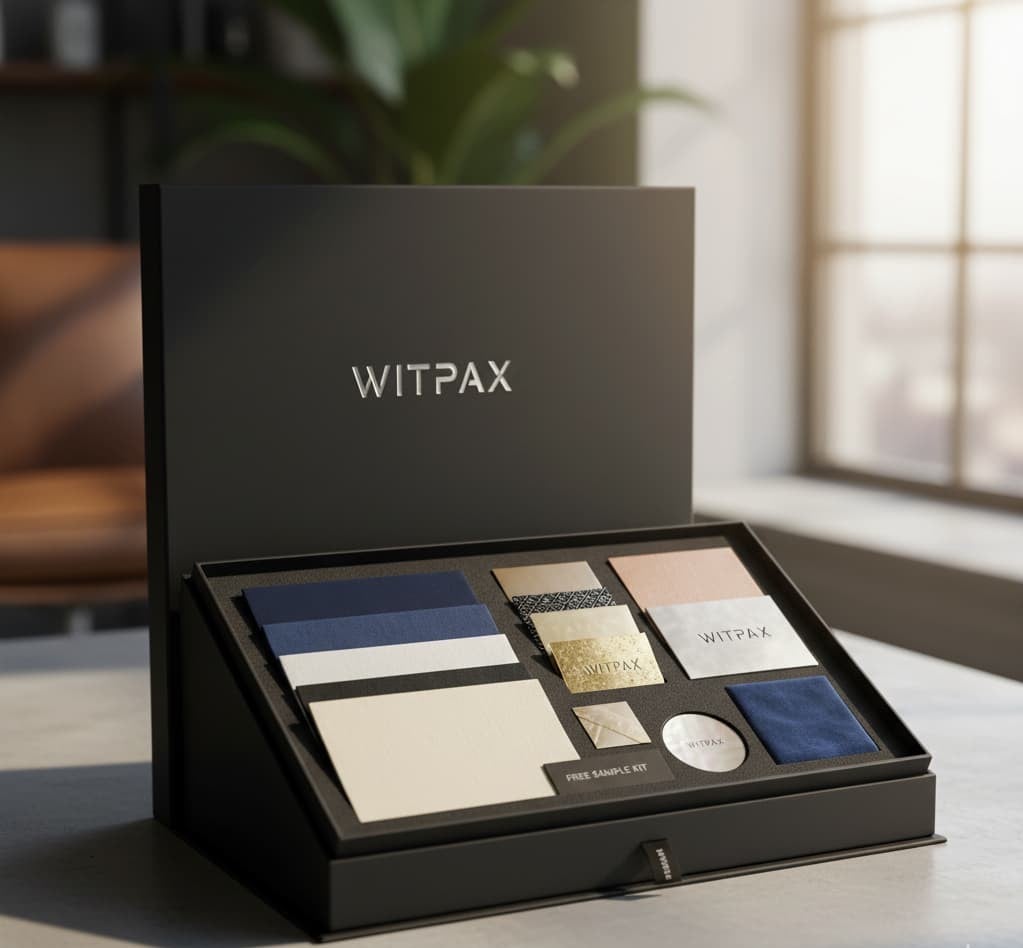
Choosing the right packaging type is a big decision, and you do not have to make it alone. Witpax specializes in helping brands select, design, and produce the ideal packaging format for their products. Whether you need a rigid box for a luxury launch, a folding carton for retail shelves, or a mailer box for your DTC store, Witpax offers low minimum order quantities starting at 100 units, in-house structural design and prototyping, expert guidance on materials and finishes, and fast production timelines.
Contact Witpax today to discuss your product, get packaging type recommendations, and request free samples. The right packaging starts with the right partner.