
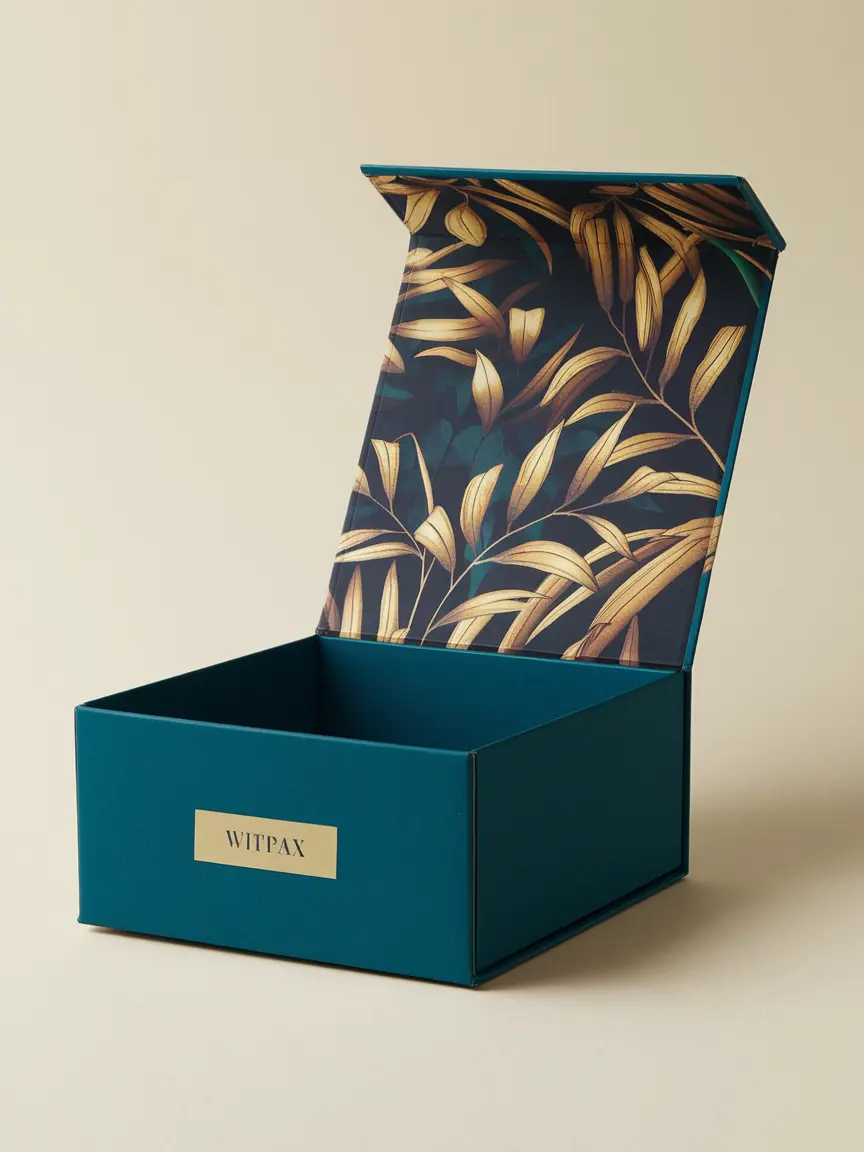
Bespoke packaging defines a fully tailored packaging solution designed to match a product’s exact dimensions, protection needs, and brand presentation. It means the packaging is built from the ground up to fit a specific product and brand, rather than adapting a standard box or template. Given that every structural and visual element serves a defined purpose, the packaging directly controls fit, material use, and visual consistency.
Bespoke packaging differs from standard and generic custom options because it allows full control over structure, board grade, finishes, and print execution. Consequently, it supports precise tolerances, optimized material thickness, and intentional opening mechanics that influence protection and perceived quality. This directly influences how the product performs during transit and how it appears at first contact.
Bespoke packaging matters because it aligns function and branding into a single system rather than treating them as separate steps. By utilizing specific materials, finishes, and formats, it adapts to use cases ranging from retail display to e‑commerce fulfillment. That flexibility explains why brands apply bespoke solutions across paper-based packaging, rigid boxes, and specialty formats.
What Is A Bespoke Package?
A bespoke package refers to a single packaging format designed around one specific product or product range. Given precise dielines and tolerances, it results in reduced void space, improved structural integrity, and more predictable shipping performance.
By utilizing tailored packaging specifications, manufacturers select board thickness, flute profile, or rigid construction based on weight and fragility. Consequently, bespoke packaging solutions often outperform standard boxes in compression strength and product stability during transit.
| Features | Bespoke Package | Standard Package |
|---|---|---|
| Dimensions | Product-specific | Fixed sizes |
| Materials | Selected per load and use | Predefined stock |
| Branding | Integrated into structure | Surface-only printing |
This direct alignment between product and packaging reduces the need for fillers and secondary inserts.
What “Bespoke” Means In Packaging
The term bespoke in packaging means tailor-made packaging developed to meet defined technical and brand criteria. Given that the design starts from zero, teams control materials, finishes, closures, and opening mechanics rather than adapting an existing template.
By applying bespoke packaging principles, brands choose elements such as magnetic closures, foam densities, or coating types to meet durability or presentation standards. This directly influences cost structure, as custom tooling and shorter production runs differ from mass production economics.
Bespoke packaging solutions also support regulatory and logistical needs. Consequently, they accommodate labeling requirements, barcodes, and palletization constraints without compromising the package’s form or function.
Bespoke Vs Custom Vs Standard Packaging

Bespoke vs custom vs standard packaging defines how tightly packaging specifications align with a product, brand, and supply chain. Each option sets clear tradeoffs between design control, cost structure, lead time, and operational flexibility.
Bespoke Packaging Vs Custom Packaging
Bespoke packaging is engineered for one product and delivers the best fit and brand alignment, while custom packaging adapts a standard box style and is faster to produce and easier to scale.
Bespoke packaging is packaging built from scratch for one specific product and brand. Because everything is engineered to match—dimensions, board grade, inserts, and print/finishing—the box delivers a precise fit, reliable protection, and a fully consistent brand look.
Custom packaging starts from a pre-existing box style (a standard dieline or proven structure) and then adds selected upgrades. You might customize printing, coatings, inserts, or small structural details, but the base design stays largely standard. This typically means faster setup while still achieving a strong branded presentation.
Standard Vs Bespoke Packaging
Standard packaging is ready-made and cost-effective but limited in fit and branding, while bespoke packaging is engineered to the product for better protection, shipping efficiency, and premium presentation.
Standard packaging uses off-the-shelf cartons, mailers, or rigid boxes in fixed sizes and materials. Because these formats are mass-produced, they’reeasy to source, quick to ship, and low cost.
Bespoke packaging removes those fixed constraints. The packaging is built around the product’s exact internal dimensions and material needs, which helps reduce empty space, limit product movement, and lower damage rates. That often leads to better shipping efficiency and fewer returns.
Quick Comparison Table
| Attribute | Bespoke Packaging | Custom Packaging | Standard Packaging |
|---|---|---|---|
| Design scope | Fully engineered to spec | Modified existing formats | Fixed formats |
| Tooling | New tooling required | Limited or shared tooling | None |
| Fit tolerance | Tight, product-specific | Moderate | Broad |
| Branding options | Unlimited | High | Minimal |
| Unit cost | Highest at low volume | Mid-range | Lowest |
| Lead time | Longest | Medium | Shortest |
| Best use case | Premium or complex products | Branded retail or e-commerce | High-volume shipping |
Why Is Bespoke Packaging Important?
Bespoke packaging shapes how customers perceive, receive, and reuse a product through tailored design, fit, and materials. It influences brand recognition, product protection, transport efficiency, and the unboxing experience, which together affect brand recall and repeat purchases.
Makes the first impression feel premium and intentional
Bespoke packaging is often the first brand touchpoint, so its structure, materials, and finishes set quality expectations fast. A deliberate unboxing moment increases trust, perceived value, and purchase confidence before the product is even handled.
Improves product presentation on shelves and in e-commerce
Bespoke packaging uses custom dimensions and print layouts that frame the product cleanly and avoid the “generic box” look. Strong visual hierarchy and finishing details help shoppers recognize value quickly in thumbnails and aisle scans.
Strengthens brand recognition through consistent design systems
Bespoke packaging repeats core brand elements—colors, typography, textures, and structural cues—across a product line. Consistency builds faster recognition, improves recall, and reduces reliance on extra inserts or promotional materials to explain quality.
Protects products better with precise fit and engineered inserts
Bespoke packaging matches internal tolerances to the product’s size, weight, and fragility. Well-designed inserts, board grade, and dielines reduce movement during transit, lowering scuffs, breakage, and corner crushing without excessive filler.
Reduces returns and replacement costs by preventing damage
Bespoke packaging improves structural integrity and minimizes transit failure points. When fewer items arrive damaged, brands face fewer returns, refunds, and reshipments. That cuts operational costs and protects customer satisfaction, especially for fragile or premium goods.
The table below shows a practical comparison:
| Feature | Standard Packaging | Bespoke Packaging |
|---|---|---|
| Internal fit | Loose | Product-specific |
| Void fill use | High | Minimal |
| Damage risk | Moderate | Reduced |
Improves shipping efficiency by reducing void space and waste
Bespoke packaging can right-size outer cartons and internal components, reducing void fill and dimensional weight. Better cube utilization improves transport efficiency, lowers freight costs, and simplifies packing workflows—especially for recurring shipments and fulfillment operations.
Upgrades the unboxing experience that drives repeat purchases
Bespoke packaging can guide opening, reveal the product cleanly, and include thoughtful compartments without clutter. A smoother unboxing experience increases delight, encourages sharing, and reinforces brand memory—making customers more likely to buy again.
Supports reuse and sustainability through smarter material choices
Bespoke packaging can be designed for reuse with durable board grades, easy-open structures, and recyclable or low-plastic components. Material and structural decisions help brands align sustainability claims with real user behavior after delivery.
Reduced returns also improve customer experience, since customers receive products in expected condition.
Types Of Packaging
Packaging types define how a product receives protection, presentation, and logistical control at different stages. Each type serves a distinct function, and bespoke design adjusts materials, structure, and features to match specific performance requirements.
Bespoke Primary Packaging
Primary packaging directly encloses the product and controls safety, usability, and shelf life. Given that it contacts the product, material selection focuses on barrier performance, regulatory compliance, and dimensional tolerance. Glass, plastics, paperboard, and flexible films dominate this layer.
By utilizing bespoke sizing and closures, brands reduce void space and handling damage. This directly influences product integrity and consumer perception. Smart packaging elements, such as QR codes, NFC tags, or freshness indicators, integrate at this level because they require direct user interaction.
Key design factors include:
- Seal strength and leak resistance
- Surface finish and print accuracy
- Compatibility with automated filling lines
Bespoke Secondary Packaging
Secondary packaging groups primary units and supports branding and retail handling. Cartons, sleeves, and rigid boxes commonly serve this role because they balance structural integrity with visual presentation. Given that secondary packaging often appears on shelves, bespoke graphics and board thickness directly influence brand recognition.
By tailoring internal fits, manufacturers prevent product movement and scuffing. Consequently, damage rates drop during stocking and short-distance transport. Smart packaging may appear here as serialized labels or anti-counterfeit features, enabling tracking without altering the primary container.
| Attribute | Standard | Bespoke |
|---|---|---|
| Fit tolerance | ±5–10 mm | ±1–2 mm |
| Branding control | Limited | Full |
Bespoke Tertiary Packaging
Tertiary packaging consolidates products for bulk handling and storage. Palletized cartons, stretch wrap, and protective corner posts define this layer. Given that logistics efficiency drives costs, bespoke tertiary packaging optimizes load stability, stack height, and weight distribution.
By adjusting carton strength ratings and pallet patterns, companies reduce compression failure during warehousing. This directly influences freight damage claims and handling speed. Smart packaging at this level often uses RFID or barcode systems to improve inventory accuracy and warehouse automation.
Common technical considerations:
- Edge crush test (ECT) ratings
- Pallet footprint standards (e.g., 1200×1000 mm)
- Stretch film gauge and tension
Bespoke Shipping / eCommerce Packaging
Shipping and eCommerce packaging protects individual orders through multi-touch delivery networks. Corrugated mailers, padded envelopes, and custom inserts dominate this category. Given that parcels face drops, vibration, and compression, bespoke design prioritizes impact resistance and dimensional weight control.
By utilizing right-sized boxes, brands lower shipping costs and material waste. Consequently, sustainability targets improve without reducing protection. Smart packaging features, such as tamper-evident seals or scan-based delivery verification, enhance security and traceability during transit.
Design priorities include:
- Drop-test performance (ISTA standards)
- Easy-open features without tools
- Returns-friendly resealing mechanisms
Examples Of Bespoke Packaging Elements
Bespoke packaging elements are the structural, material, visual, and interior design details—such as custom box sizing, board strength, print finishes, inserts, and closures. Below are the common bespoke packaging elements:
Bespoke packaging boxes (custom size and fit)
Bespoke boxes are engineered around exact product dimensions and handling needs. Precise sizing reduces internal movement, improves protection, and can lower material waste compared with oversized standard cartons.
Structural engineering (board thickness and flute profile)
Durability depends on structural decisions such as rigid board thickness (often 1.5–3 mm) or corrugated flute profiles. Heavier board and stronger structures help premium packaging hold its shap
Visual branding (color, typography, and finishes)
Bespoke packaging controls visual identity through consistent color systems, typography, and surface finishes. Techniques like spot color matching, foil stamping, and specialty coatings improve accuracy and help the brand look consistent across retail and e-commerce.
Interior components (inserts, wraps, and protective layers)
Interior elements add both function and perceived value. Custom die-cut inserts stabilize the product, while branded tissue, wraps, or sleeves signal care and make the unboxing feel intentional rather than generic.
Accessory features (closures, pulls, and reusable details)
Accessory features support specific use cases and premium formats. Magnetic closures, ribbon pulls, and other opening details improve usability and durability, making them ideal for reusable gift boxes and long-term secondary use.
Common bespoke packaging elements and what they actually do:
| Element | What you control | What it improves | Common options / specs | Best for |
|---|---|---|---|---|
| Box size + dieline | Internal tolerance, panel geometry | Less movement, less filler, lower damage | 0–3 mm clearance, custom die line | Fragile items, premium unboxing, shipping efficiency |
| Board grade / thickness | Stiffness, crush resistance | Shape retention, stacking strength | Rigid board 1.5–3 mm; paperboard GSM; corrugated flute (E/B/C) | Gift boxes, subscription boxes, retail-ready packs |
| Insert engineering | Lock points, contact surfaces | Transit stability, scratch prevention | EVA/foam, molded pulp, paperboard insert, corrugated insert | Glass, electronics, cosmetics, high-return categories |
| Cushioning design | Impact absorption | Fewer breakages, fewer returns | Edge buffers, corner blocks, suspension insert | Drop-risk shipping, long-distance fulfillment |
| Closure system | Open/close cycle, seal strength | Usability, reuse, perceived premium | Magnetic, ribbon pull, tuck flap, tear strip | Reusable gift boxes, luxury packaging |
| Print method | Color accuracy, detail | Brand consistency, shelf impact | Spot color, CMYK, digital, Pantone matching | Brand-critical SKUs, multi-product lines |
| Finish / coating | Surface feel + protection | Premium look, scuff resistance | Matte/gloss lamination, soft-touch, aqueous, UV | E-commerce unboxing, premium retail |
| Foil / emboss / deboss | Contrast + tactility | Higher perceived value, recognition | Hot foil, cold foil, emboss/deboss, spot UV | Luxury, gifting, limited editions |
| Tissue / wrap / sleeve | Layering + reveal sequence | Unboxing experience, brand reinforcement | Branded tissue, belly band, inner sleeve | Cosmetics, apparel, lifestyle brands |
| Labeling + compliance zones | Info hierarchy | Fewer errors, faster picking | Barcode placement, warning panels, QR/NFC | Logistics-heavy ops, regulated products |
| Outer shipper optimization | Dimensional weight, void space | Lower freight cost, less waste | Right-sized shipper, dual-pack design | DTC brands, high-volume fulfillment |
| Sustainability spec | Material end-of-life | Better sustainability outcomes | FSC paper, recycled content, molded pulp, mono-material | Eco positioning, brand compliance goals |
How To Bespoke Paper Packaging?
To bespoke paper packaging, you should follow these steps:
- Assese Requirements: Packaging design starts with defined dimensions, weight limits, and protection needs; given that paperboard grades vary by GSM and fiber mix, these inputs determine board thickness and folding tolerances. Consequently, accurate specs reduce material waste and improve structural integrity.
- Select Material: Designers choose kraft, SBS, or recycled paper based on strength, finish, and sustainability targets; by utilizing higher GSM boards, the package gains rigidity compared to lighter stock. This directly influences durability during transit versus shelf presentation.
- Structural Design: Dielines, flaps, and closures align with product geometry; given that custom inserts outperform standard void fill, bespoke layouts improve fit and reduce movement. This results in better protection with less excess material.
- Choose Printing Method: Printing options include offset for high-detail graphics and digital for short runs; by utilizing offset printing, color consistency improves at scale compared to digital. Consequently, brand accuracy increases for large orders.
- Decide Finishing Details: Coatings, embossing, and foil stamping enhance tactility; given that finishes add cost and processing time, teams balance aesthetics against budget. This directly influences perceived quality at unboxing.
- Find a Production Partner: A bespoke packaging company coordinates design intent with a packaging manufacturer; by aligning tooling and machinery capabilities early, lead times shorten. Consequently, production meets tolerances without redesign.
- Compliance & Testing: Compression and drop tests validate performance; given that paper packaging must meet transit standards, testing confirms real-world durability. This reduces failure rates before full-scale manufacturing.
Common Materials & Finishes of Bespoke Paper Packaging
Common materials and finishes of bespoke paper packaging are as below:
Paperboard for Bespoke Folding Carton
Paperboard forms the structural base of bespoke folding cartons used in retail and direct-to-consumer channels. Given that paperboard ranges from 250–400 GSM, packaging companies select lighter weights for cosmetics and heavier grades for electronics, consequently controlling stiffness and crease memory.
Paperboard accepts offset, digital, and flexographic printing with consistent ink holdout. By utilizing coated solid bleached sulfate (SBS) versus uncoated kraft board, brands trade surface smoothness for fiber visibility, which directly influences color accuracy and tactile feel.
Common paperboard attributes include:
- Caliper consistency for clean folding
- Clay-coated surfaces for high-resolution graphics
- Recycled fiber content to support sustainable packaging goals
Corrugated For Shipping Boxes
Corrugated board supports bespoke shipping boxes where protection and logistics efficiency matter most. Given that flute profiles determine compression strength, packaging suppliers select E-flute for compact retail shippers and B or C-flute for heavier cardboard packaging, consequently improving stackability.
Corrugated structures combine a fluted medium with linerboards, which distributes impact across the surface area. By adjusting board combinations such as single-wall vs. double-wall, packaging companies control burst strength and dimensional stability.
| Flute Type | Thickness | Primary Use |
|---|---|---|
| E-Flute | ~1.5 mm | Premium mailers |
| B-Flute | ~3.0 mm | Subscription boxes |
| C-Flute | ~4.0 mm | Bulk shipping |
Greyboard and Wrapping Paper For Luxury Rigid Boxes
Greyboard provides the core structure for luxury rigid boxes that require high load-bearing capacity. Given that greyboard typically measures 800–1800 GSM, it delivers structural integrity, consequently allowing sharp edges, tight laps, and consistent wall thickness.
Wrapping paper defines the exterior appearance of rigid boxes. By utilizing textured, dyed, or specialty papers over greyboard, packaging companies achieve premium materials without compromising strength, which directly influences perceived value at unboxing.
Design variables commonly managed include:
- Board thickness tolerance for uniform corners
- Paper grain direction to reduce warping
- Lamination compatibility for added durability
Coatings & Sustainability Trade-Offs
Coatings and finishes modify durability, appearance, and environmental impact. Given that aqueous coatings protect surfaces with minimal VOCs, they support sustainable packaging initiatives while offering moderate scuff resistance.
Film laminations such as matte or soft-touch increase abrasion resistance and tactile appeal. Consequently, they complicate recyclability due to plastic layers, which forces packaging suppliers to weigh performance against disposal requirements.
Common finish comparisons include:
- Aqueous coating: recyclable, lower protection
- UV coating: high gloss, reduced fiber recovery
- Soft-touch lamination: premium feel, lower recyclability
Bespoke Packaging For Common Use Cases
Bespoke packaging are commonly used in these industries:
Luxury Brands
Luxury brands use bespoke packaging to control presentation quality and perceived value at the point of contact. Given that high-value items often feature delicate finishes, rigid boxes with higher board thickness and precise tolerances protect products while maintaining structural integrity. This directly influences damage rates and return costs.
Luxury brands also specify finishes such as soft-touch lamination, foil stamping, or debossing. By utilizing these controlled surface treatments instead of standard print, brands reinforce visual consistency across retail and ecommerce channels. Compared with stock cartons, bespoke formats allow tighter fit, reduced void fill, and deliberate opening sequences that support brand positioning.
Common specifications include:
- Materials: rigid board, premium paper wraps
- Fit: product-specific cavities or inserts
- Finish: matte, gloss, or tactile coatings
Subscription Boxes
Subscription boxes rely on bespoke packaging to balance cost control with repeat engagement. Given that shipments occur on fixed cycles, brands design box dimensions to match average product assortments, which reduces dimensional weight charges. This directly influences per-unit shipping costs.
Subscription services also depend on fast packing workflows. By utilizing standardized bespoke die-lines rather than random box sizes, fulfillment teams reduce packing time and error rates. Compared with generic boxes, custom-printed interiors support rotating themes or campaigns without changing external dimensions, which simplifies logistics while keeping the experience fresh.
Key functional priorities include:
- Consistent sizing to optimize freight rates
- Lightweight materials to control postage
- Modular inserts to adapt to monthly contents
Food Packaging
Food packaging applies bespoke packaging to meet safety, shelf-life, and regulatory requirements. Given that food products vary in moisture, oil content, and temperature sensitivity, material selection directly influences barrier performance. This results in better control over freshness and contamination risks.
By utilizing food-grade boards, coatings, or liners, manufacturers meet compliance standards while tailoring pack structure to portion size and distribution method. Compared with off-the-shelf containers, bespoke designs reduce excess headspace, which limits product movement and improves stacking efficiency during transport.
Typical considerations include:
- Barrier properties: grease, moisture, oxygen
- Structure: fold patterns that maintain seal integrity
- Compliance: food-contact material certifications
Ecommerce Brands
Ecommerce brands use bespoke packaging to optimize protection and shipping efficiency across parcel networks. Given that products face multiple handling points, custom box strength and internal supports reduce breakage. This directly influences customer satisfaction and replacement costs.
By designing packaging around exact product dimensions, brands minimize void fill and avoid oversized cartons. Compared with standard packaging, bespoke solutions lower dimensional weight fees and improve pallet utilization. Exterior print also serves as a brand touchpoint without relying on additional marketing inserts.
A typical comparison highlights the impact:
| Attribute | Standard Box | Bespoke Box |
|---|---|---|
| Fit | Generic | Product-specific |
| Shipping cost | Higher variance | More predictable |
| Damage risk | Moderate | Reduced |
How to Buy Bespoke Packaging Online?
To bespoke packaging online, follow these steps:
Step 1: Choose your packaging type
Go to Witpax’s product categories and pick the box style you need (for example: rigid box, folding carton, mailer box). Start with the structure that matches how your product is stored, shipped, and displayed.
Step 2: Select your box size or request a custom size
If your product fits a listed size, choose it to move faster. If you need an exact fit, choose custom sizing and prepare your product dimensions (Length × Width × Height) and the estimated product weight.
Step 3: Set core specs before you ask for pricing
Decide the essentials that affect cost and lead time:
- Material/board type and thickness
- Insert needs (none / paper insert / foam / molded pulp, etc.)
- Print coverage (outside only / inside + outside)
- Finish (matte, gloss, soft-touch, foil, emboss, spot UV)
- Quantity (Witpax supports low MOQ, typically starting at 500)
Step 4: Upload your artwork or request a dieline
If you already have design files, upload them in the format Witpax accepts (commonly AI / PDF / EPS).
If you don’t, request a dieline template first, then place your design on the dieline and upload the final version.
Step 5: Request a quote or place an order
Submit your specs and quantity to get pricing. Confirm:
- Unit price and total cost
- Sampling option (if needed)
- Production lead time
- Shipping method and delivery timeline
Step 6: Approve the digital proof
Witpax will send a proof/mockup for approval. Check these before you approve:
- Box dimensions and opening direction
- Bleed, safe zone, and barcode/label placement
- Color expectations (Pantone/spot color if required)
- Finish placement (foil, emboss, spot UV alignment)
Step 7: Confirm sampling (recommended for first orders)
For first-time bespoke packaging, request a sample to verify:
- Fit and insert tension
- Board stiffness and structure strength
- Print accuracy and finish quality
- Unboxing flow and presentation
Step 8: Pay and start production
Once the proof (and sample, if used) is approved, confirm payment. Production starts only after approval, so delays here delay the whole schedule.
Step 9: Track production and shipping delivery
Witpax will confirm production status and shipment details. When the cartons arrive, inspect a few units immediately for fit, print, and finish consistency before storing or fulfilling orders.
What Affects Bespoke Packaging Cost?
Bespoke packaging cost depends on design complexity, material grade, and production volume. Given that custom tooling and plates require setup time, intricate structures like rigid boxes with magnetic closures cost more than folding cartons.
Material selection directly influences unit price. Thicker board, specialty papers, and finishes such as foil stamping or embossing increase material and labor input, which raises costs per unit.
| Cost Factor | Attribute | Price Impact |
|---|---|---|
| Box structure | Rigid vs folding | Rigid costs more due to board thickness |
| Print method | Digital vs offset | Offset lowers cost at higher volumes |
| Finish | Matte, gloss, foil | Decorative finishes increase cost |
| Quantity | Low vs high run | Higher volume reduces unit price |
By utilizing online quoting tools, buyers can compare configurations in real time. Consequently, they can adjust specifications to meet budget targets without redesigning the entire package.
What Is MOQ For Bespoke Packaging?
MOQ is the minimum number of units a supplier requires for one packaging production run.
For bespoke packaging, MOQ is often high because structural engineering, sampling, and print setup create fixed costs. Offset printing makes this harder since plates and make-ready time must be paid upfront, so suppliers push brands toward larger runs to keep unit prices reasonable. The dilemma is simple: brands need premium packaging, but they do not want to overbuy inventory or lock cash into thousands of boxes.
Witpax solves this by offering bespoke-style packaging with a low MOQ of 500 units, so brands can launch, test, or restock without committing to massive volumes.
| Production Method | WitPax MOQ | Best Use Case |
|---|---|---|
| Digital print | 1–100 units | Sampling, short runs |
| Offset print | 500 units | Scale production |
| Hybrid models | 250–1,000 units | Growing brands |
By choosing suppliers with scalable MOQs, buyers can increase volume without changing packaging architecture.
How to Plan the Timeline for Bespoke Packaging Online?
Bespoke packaging timelines depend on design approval, production method, and shipping distance. Structural design and dieline approval usually require 2–5 business days, given that tolerances must align with product dimensions.
Printing and finishing add another variable. Digital jobs often complete within 3–7 days, while offset and specialty finishes extend production to 2–4 weeks due to drying and curing processes.
Logistics planning directly affects delivery accuracy. Domestic production shortens transit times, while overseas manufacturing requires freight planning and customs clearance.
| Stage | Typical Duration |
|---|---|
| Design & proofing | 2–5 days |
| Production | 5–20 days |
| Shipping | 2–30 days |
By confirming deadlines upfront and approving proofs quickly, buyers reduce delays that affect product launches and inventory planning.